Endocrine Disruptors, Microplastics, and Daily Exposure: Why Awareness Does Not Always Change Behavior
Abstract
Microplastics and endocrine-disrupting chemicals (EDCs) are environmental health concerns, but awareness may not affect every exposure behavior in the same way. This study analyzed survey data from 737 participants ages 13 and older to examine whether awareness of microplastics and EDCs was associated with high-risk exposure behaviors and to identify factors that may explain the awareness-action gap. Because only 32 respondents were ages 13–17, statistical tests were conducted on the full sample while interpreting the findings for behaviors that are relevant to adolescents. Participants were grouped into lower awareness (n = 44), microplastics-only aware (n = 143), and microplastics + endocrine aware (n = 550) groups. Overall awareness of microplastics was high (94.0%), and awareness of endocrine disruptors was also substantial (76.7%). However, high-risk behaviors remained common, especially frequent synthetic clothing use (63.5%). Awareness group was significantly associated with both frequent single-use bottle use (χ²(2, N = 737) = 28.38, p < 0.001) and frequent synthetic clothing use (χ²(2, N = 737) = 26.21, p < 0.001). The microplastics + endocrine aware group reported the lowest frequent bottle use but the highest frequent synthetic clothing use, suggesting that awareness may reduce more obvious plastic behaviors while leaving less visible exposure pathways overlooked. Convenience, cost, and lack of information were the most common barriers to change. These findings suggest that education alone may not be enough to reduce exposure unless hidden exposure pathways and practical barriers are also addressed.
Introduction
Microplastics are plastic particles smaller than 5 millimeters that have been found in water, food, and air. Humans may be exposed to microplastics through ingestion, inhalation, and possible dermal contact (Cox et al., 2019; Wright and Kelly, 2017). Many everyday plastic products can also contain endocrine-disrupting chemicals (EDCs), including bisphenol A (BPA), phthalates, and per- and polyfluoroalkyl substances (PFAS). These chemicals may interfere with hormone signaling and have been connected to reproductive, developmental, and metabolic effects (Gore et al., 2015).
This issue is relevant to adolescents because hormones play an important role during growth and development. At the same time, many potential exposure sources are part of normal routines, such as drinking from plastic bottles, eating food packaged in plastic, and wearing synthetic fabrics. These behaviors may feel ordinary, so people may not think of them as exposure risks even when they have heard of microplastics.
Public awareness of microplastics has increased, but awareness may not lead to equal behavior change across all exposure pathways. People may recognize more visible sources of plastic, such as single-use water bottles, while overlooking less visible sources, such as synthetic clothing. This study was guided by the following research question: To what extent does awareness of microplastics and endocrine-disrupting chemicals predict high-risk exposure behaviors among adolescents, and what factors explain the awareness-action gap?
The hypothesis was that greater awareness would be associated with lower engagement in obvious plastic-related behaviors, such as frequent single-use bottle use, but would be less effective in reducing less visible and more routine exposure behaviors, especially synthetic clothing use.
Materials and Methods
Study Design and Participants
A cross-sectional survey was conducted using Google Forms. The final dataset included 737 responses from participants ages 13 and older. Survey links were distributed online and in-person, creating a convenience sample. Because only 32 participants were ages 13–17, the main statistical tests were conducted using the full sample. The results were then interpreted with attention to adolescent health relevance rather than treated as adolescent-only findings.
Survey Instrument
The survey included 42 questions covering demographics, exposure-related behaviors, awareness and knowledge, health beliefs, willingness to change, and barriers. Behavior questions focused on common exposure pathways, including single-use plastic bottles, plastic food contact, packaged food, and synthetic textiles. The survey was based on exposure pathways discussed in prior research, but it was not formally validated before distribution.
Awareness Groups
Participants were classified into three awareness groups. The lower awareness group included respondents who had not heard of microplastics before the survey. The microplastics-only aware group included respondents who had heard of microplastics but not endocrine disruptors. The microplastics + endocrine aware group included respondents who had heard of both microplastics and endocrine disruptors.
Exposure Score
A composite Exposure Score was created using ten behavior questions related to plastic and synthetic-material exposure. Responses were coded from 1 (Never) to 5 (Daily) and averaged. Higher scores indicated more frequent exposure-related behaviors
Statistical Analysis
Descriptive statistics were used to summarize awareness, behaviors, and barriers. Chi-square tests of independence were used to examine whether awareness group was associated with frequent single-use bottle use and frequent synthetic clothing use, both defined as Often or Daily. A Pearson correlation test was used to examine the relationship between self-reported Knowledge Score and Exposure Score. Exploratory logistic regression models were used to test key behavior contrasts between awareness groups. Statistical significance was defined as p < 0.05.
Results
Overall Awareness and Exposure
Microplastics awareness was reported by 94.0% of participants, while 76.7% reported awareness of endocrine disruptors. Despite high awareness, exposure-related behaviors remained common. Frequent synthetic clothing use was reported by 63.5% of participants, while 20.2% reported frequent single-use bottle use. The mean Exposure Score was 3.19 (SD = 0.70).
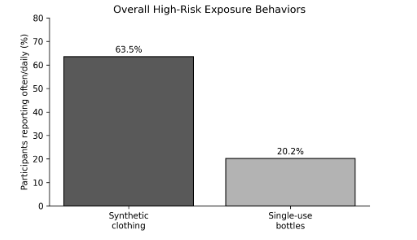
Figure 1. Overall High-Risk Exposure Behaviors. Percentage of participants reporting often or daily engagement in two representative exposure-related behaviors. Synthetic clothing use was much more common than single-use bottle use.
Awareness Groups and Exposure Behaviors
Awareness group was significantly associated with frequent single-use bottle use, χ²(2, N = 737) = 28.38, p < 0.001. The microplastics + endocrine aware group reported the lowest frequent bottle use (15.8%), compared with 25.0% in the lower awareness group and 35.7% in the microplastics-only aware group. In an exploratory logistic regression, the microplastics + endocrine aware group had lower odds of frequent single-use bottle use than the microplastics-only aware group (OR = 0.34, p < 0.001).
The pattern was different for synthetic clothing. Awareness group was also significantly associated with frequent synthetic clothing use, χ²(2, N = 737) = 26.21, p < 0.001. However, the microplastics + endocrine aware group reported the highest frequent synthetic clothing use (68.4%), followed by the microplastics-only aware group (53.1%) and the lower awareness group (36.4%). In an exploratory logistic regression, the microplastics + endocrine aware group had higher odds of frequent synthetic clothing use than the lower awareness group (OR = 3.78, p < 0.001).
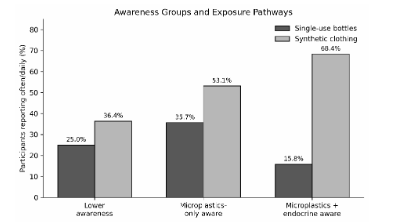
Figure 2. Awareness Groups and Exposure Pathways. Percentages of participants in each awareness group reporting often or daily single-use bottle use and synthetic clothing use. The most aware group reported lower bottle use but higher synthetic clothing use, suggesting that awareness may affect visible and less visible exposure pathways differently.
Knowledge and Overall Exposure
Self-reported knowledge was modestly but significantly associated with lower Exposure Score (r = -0.30, p < 0.001). This means that higher knowledge was linked with somewhat lower overall exposure-related behavior, but the relationship was not strong enough to remove high-risk behaviors across all exposure pathways.
Behavior Change Intentions and Barriers
Most participants (72.9%) reported that they would be likely or very likely to change their habits if informed about the risks of microplastics and endocrine disruptors. The most common barriers were convenience (25.2%), cost (22.8%), and lack of information (21.7%).
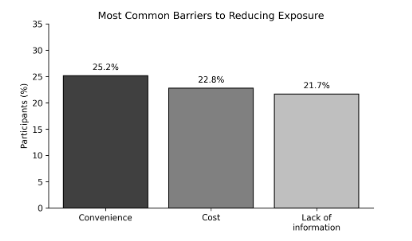
Figure 3. Most Common Barriers to Reducing Exposure. Convenience, cost, and lack of information were the three most common barriers, suggesting that practical constraints help explain the awareness-action gap.
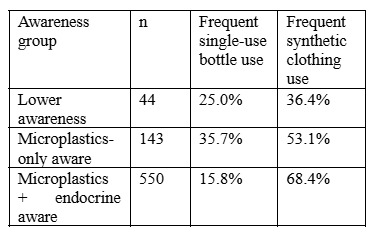
Table 1. Awareness Groups and High-Risk Exposure Behaviors
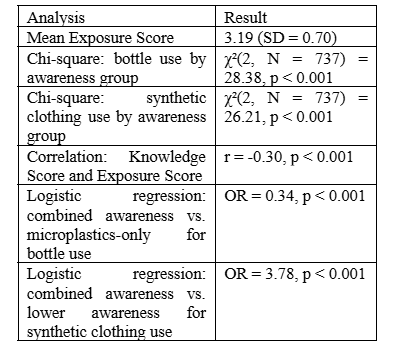
Table 2. Summary of Key Statistical Findings
Discussion
This study shows that awareness does not affect all exposure behaviors in the same way. Participants who were aware of both microplastics and endocrine disruptors reported the lowest frequent use of single-use bottles, which suggests that awareness may help reduce more obvious plastic behaviors. However, this same group reported the highest frequent use of synthetic clothing, showing that awareness did not reduce a less visible but common exposure pathway. This contrast is the central finding of the study. Single-use bottles are easy to recognize as plastic, so people may be more likely to connect them with microplastic exposure. Synthetic clothing is different. Even though fabrics such as polyester, nylon, and spandex are plastic-based materials, they are part of normal daily life and may not be viewed as an exposure source. This makes synthetic clothing a form of invisible exposure.
The results also suggest that habits and routines matter. Many exposure-related behaviors happen automatically because they are convenient, affordable, and widely available. People can understand the risk but still continue the behavior because changing it requires more than awareness. It requires noticing the behavior, having access to alternatives, and being able to afford them.
The barrier results support this explanation. Although most participants said they would be willing to change their habits, convenience and cost were the most common obstacles. This shows that the awareness-action gap is not simply a knowledge problem. It is also a practical problem shaped by access, affordability, and routine.
These findings are relevant to adolescent health because adolescence is a period of growth and hormonal development. Even though the statistical analysis used the full sample, the behaviors studied, such as bottled drink use and synthetic clothing use, are common among adolescents. Reducing exposure may therefore require public health strategies that make hidden exposure pathways more visible and lower-exposure choices easier to adopt.
Limitations
This study has several limitations. First, the survey used self-reported data, which may be affected by recall bias or social desirability bias. Second, the sample was recruited online and was not randomly selected, so the results may not represent the broader population. Third, the adolescent subgroup was small, so the findings should be interpreted as relevant to adolescents rather than fully adolescent-specific. Fourth, the survey was not formally validated before use. Finally, the Exposure Score reflects reported behavior, not measured biological exposure.
Conclusion
Awareness of microplastics and endocrine disruptors was high in this sample, but its relationship to behavior was uneven. The data suggest that awareness may help reduce obvious plastic behaviors, such as frequent single-use bottle use, while doing less to reduce less visible and routine exposure pathways, especially synthetic clothing use. Because convenience and cost remained major barriers, reducing exposure will likely require more than education alone. Effective strategies should make hidden exposure sources easier to recognize and lower-exposure choices easier, more affordable, and more practical in daily life.
References
Cox, K. D., Covernton, G. A., Davies, H. L., Dower, J. F., Juanes, F., & Dudas, S. E. (2019). Human consumption of microplastics. Environmental Science & Technology, 53(12), 7068–7074.
Gore, A. C., Chappell, V. A., Fenton, S. E., Flaws, J. A., Nadal, A., Prins, G. S., … Zoeller, R. T. (2015). EDC-2: The Endocrine Society’s second scientific statement on endocrine-disrupting chemicals. Endocrine Reviews, 36(6), E1–E150.
Wright, S. L., & Kelly, F. J. (2017). Plastic and human health: A micro issue? Environmental Science & Technology, 51(12), 6634–6647.