The Effects of the Deepwater Horizon Oil Spill in the Gulf of Mexico?
What is the event?
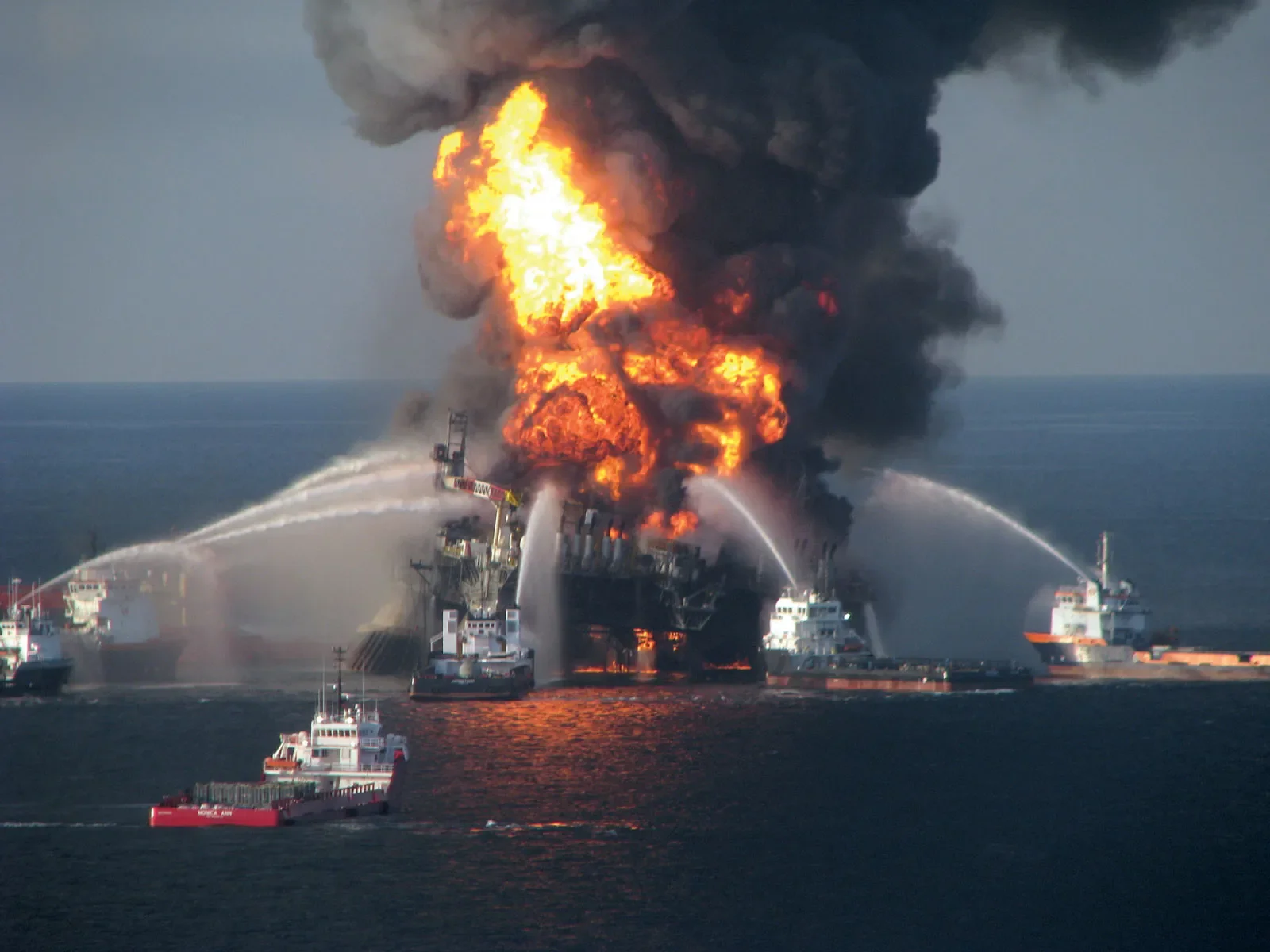
On April 20, 2010, the largest oil spill in U.S. history began with an explosion on the Deepwater Horizon drilling platform in the Gulf of Mexico. The disaster caused an estimated 60,000 barrels of oil to spill from the damaged well each day for about 87 days, resulting in 134 million gallons entering the Gulf (NOAA, 2026). The explosion killed 11 people and injured 17. Recovery efforts proved challenging due to the vast affected area: only about 16% of the oil was recovered, leaving much of it at sea or reaching land ("What happened," 2026). Some oil became trapped underwater or settled on the seafloor, while about half rose to the surface and was pushed toward shore, contaminating over 1,300 miles of coastline—the distance from New Orleans to New York City. The main coastal states impacted were Louisiana, Mississippi, Alabama, and Florida (Sandifer et al., 2021). The Deepwater Horizon spill left long-lasting health, economic, and social impacts on Gulf Coast communities through environmental contamination, direct exposure during cleanup, and years of disruption.
How it happened
According to BP P.I. (British Petroleum), the explosion was triggered by a surge of high-pressure methane gas that moved up the drilling pipe after the cement sealing the Macondo well failed. Instead of staying contained in the reservoir, hydrocarbons leaked up the pipe. Safety tests, including a negative pressure test, were flawed and not addressed promptly by BP and Transocean. When the gases reached the rig, they were diverted to a mud-gas separator, which released gas onto the rig instead of safely overboard. This allowed gas to enter engine rooms through the ventilation system, creating a fire risk that the rig's safety systems failed to prevent. Following the explosion and fire, the crew lost the ability to use manual controls. The rig’s blowout preventer, located on the seafloor and designed to automatically seal the well, also failed due to malfunctions. BP’s chief executive, Tony Hayward, explained that a complex series of failures involving multiple companies—not just a single mistake—led to the disaster. In response, BP proposed 25 recommendations to prevent similar events, focusing on improving blowout preventers, well control, testing, emergency systems, audits, and crew training.
Effects on the ecosystem
Not only was there a vast amount of damage done to the land and water, but also to the inhabitants and wildlife across those areas. Deep-sea corals, birds, sea turtles, fish, and marine mammals experienced devastating disturbances (“what happened”, 2026). As the oil sank to the seafloor, it mixed with the water, which saturated marshes (a type of wetland ecosystem in which water covers the ground for long time periods) and soiled nearby beaches. Marine or other types of animals that swarm these regions inhaled or swallowed the oil. The National Oceanic and Atmospheric Administration (NOAA) provides information about different sections of the marine environment affected. In the marshes and other nearshore habitats, oil is spilled onto the vegetation, and this vegetated shoreline has a stream running into the ocean. The beach has shallow waters and sandy shores, which are covered in oil. Birds such as pelicans and other sea birds land on the oiled vegetation and water, which are also food sources. Sea turtles and fish, or other water column species, get caught in the oil in the water that they ingest. Deep-sea communities, like deep-sea corals, are smothered by the oil that sank to the bottom. Additionally, the use of chemical dispersants increased human and environmental exposure risks; cleanup workers and nearby residents were exposed through air, water, and skin contact (D’Andrea & Reddy, 2018).
Affect on human health
Now, with the loss of ecosystem services, there are increased risks to human communities. This includes reduced seafood availability, weakened coastal protection from storms, leading to long-term mental and physical symptoms for those exposed, and much more (NOAA Coastal Wetland Habitat; NOAA Dynamic Planet). Those aboard and their family and friends, as well as those responsible for the ship and overall well-being, faced constant uncertainty. The spill was unprecedented, and this called for complex and sometimes confusing procedures, for the normal ones backfired, and this was a lack of familiarity and a loss of control. It cannot be forgotten that the crew and cleanup workers sustained incredibly dangerous issues from the spill. The oil, crude oil, is a mix of a host of volatile organic chemicals, including toxic chemicals such as benzene, toluene, xylene, ethylbenzene, and a host of other chemicals. The exposure to oil, dispersants, and fumes was linked to neurological symptoms, which increased the risk of long-term illness (D’Andrea & Reddy, 2018). Researchers Reddy G Kesava and Mark D’Andrea conducted and analyzed research done on the health of the cleanup crew from the spill. They noted that there were several symptoms, such as shortness of breath, headaches, skin rashes, chronic cough, dizzy spells, painful joints, and chest pain. These symptoms were seen in the test subjects at the time of the spill as well as 7 years after, making them serious long-term effects. In addition to this, after the 7-year follow-up, it was found that 91% of the subjects had progressive deterioration of their respiratory system and developed chronic rhinosinusitis, and 45%of them had developed chronic reactive airway dysfunction syndrome as new symptoms that were not present upon initial examination. Some new problems were pulmonary function abnormalities. At first inspection, 87% of the subjects had normal pulmonary function, and none had severe abnormalities. However, at the end of the 7 years, the number of normal functions decreased, and 9% ended up with severe abnormalities. Even more concerning, data showed that short but extreme participation in the cleanup activities still led to persistent long-term damaging health effects (D’Andrea & Reddy, 2018). Additionally, they were left with depression, anxiety, and PTSD.
Unfortunately, these effects expanded to many more groups. The effects of the oil were seen in seafood workers and fishers. Marine scientist, Paul A. Sandifer, and his team found that exposure to the toxic crude oil and chemical dispersants left them with severe, and in many cases, long-term health problems. Physical symptoms were not as severe as those of the cleanup workers and were apparent in the months after the spill, not long-term, but they were issues. They reported having short-term irritation in their throats, wheezing, shortness of breath, and a burning sensation in their nose and throat. In addition, the oil vapors left many fatigued from sleep disorders and headaches because they inhaled it. However, there were acute mental effects due to the sudden loss of livelihoods, income, and cultural norms. Many became depressed and anxious about the dangers of the food and the decrease in economic productivity. Individuals who suffered from income loss because of the spill had higher rates of tension, fatigue, and mood disturbances. And overall, this disrupted the community. It must also be noted that with this damage to fish and wildlife, many families, especially indigenous tribes, that rely on traditional fishing, experienced a major loss of food sources.
The ongoing uncertainty about environmental safety worsened mental health, and the effects of the spill lasted for years (Sandifer et al., 2021). Health effects persisted years after, environmental damage continued to affect livelihoods, district institutions and industries grew, and all this demonstrates how environmental disasters become a public health crisis.
Works Cited
Bp. "BP releases report on causes of Gulf of Mexico tragedy." British Petroleum, 8 Sept. 2010, www.bp.com/en/global/corporate/news-and-insights/press-releases/bp-releases-report-on-causes-of-gulf-of-mexico-tragedy.html. Accessed 3 Apr. 2026.
"Coastal Wetland Habitat." NOAA Fisheries, 29 Sept. 2025, www.fisheries.noaa.gov/national/habitat-conservation/coastal-wetland-habitat#more-information. Accessed 26 Dec. 2025.
D'Andrea, Mark A, and G Kesava Reddy. "The Development of Long-Term Adverse Health Effects in Oil Spill Cleanup Workers of the Deepwater Horizon Offshore Drilling Rig Disaster." Frontiers in public health vol. 6 117. 26 Apr. 2018, doi:10.3389/fpubh.2018.00117
Sandifer, Paul, et al. "Human Health and Socioeconomic Effects of the Deepwater Horizon Oil Spill in the Gulf of Mexico." Oceanography, vol. 34, no. 1, 1 Mar. 2021, pp. 174-91, https://doi.org/10.5670/oceanog.2021.125.
"2026 Science Olympiad: Dynamic Planet - Oceanography." National Oceanic and Atmospheric Administration, 19 Nov. 2025, www.noaa.gov/office-education/outreach-communication/science-olympiad/2026-dynamic-planet. Accessed 26 Dec. 2025.
"What happened during the Deepwater Horizon oil spill?" National Oceanic and Atmospheric Sphere, 26 Feb. 2026, oceanservice.noaa.gov/education/tutorial-coastal/oil-spills/os04-sub-01.html. Accessed 29 Mar. 2026.