Exploring the History and Sustainable Developments of Nanoparticles
Abstract
Nanoparticles are tiny materials (<1000 nanometers (nm) in size) that possess specialized physicochemical properties different from bulk materials of the same composition (Medina et al., 2007, para. 1). What this indicates is that essentially, a substance existing in extremely tiny quantities exhibits unique physical and chemical traits due to being on a quantum scale (The Welding Institute, n.d.), which is more elaborately known as the quantum confinement effect (Zaccone, 2025). The quantum confinement effect is the phenomenon where the energy of subatomic particles significantly increases when its motion is restricted (Zaccone, 2025). This can be seen in nanostructured metal oxides such as titanium dioxide and ceric oxide, as both are materials that provide more efficient charge transfer and reaction kinetics for fuel cells (Elezz et al., 2025). Additionally, nanoparticles have fortified energy storage technologies like lithium-ion and redox flow batteries (Mohammed et al., 2025).
High surface area is another reason why nanoparticles act so drastically from their corresponding bulk materials (Khan et al., 2017). Such surface areas are directly proportional to the rate of a reaction (reactivity) (Joudeh and Linke, 2022) which is why nanoparticles are “very reactive in the cell environment” (Medina et al., 2022, para. 20) and have been used in fields ranging from drug delivery to environmental sustainability (The Welding Institute, 2021). Other properties of these enigmatic units include anti-inflammatory and antibacterial activity, biocompatibility (Altammar, 2023), and unusual optical characteristics such as photoluminescence (Alluhaybi et al., 2019) or quantum dot emission (the process of a semiconductor nanocrystal absorbing light and re-emitting it at a size-dependent wavelength, as outlined in CD Bioparticles (n.d.)).
From a forward-thinking perspective, nanoparticles are at the frontlines of scientific sustainability. They have proven effective in facilitating more expansive sunlight harvesting in solar cells (Elezz et al., 2025), and find many applications in wastewater treatment due to their mechanical tunability and ability to form water-porous membranes (Tripathy et al., 2024). Even more remarkable are biogenic nanoparticles, synthesized “through biological processes” (Kumar et al., 2023, para. 1) as well as bacteria, fungi, and algae (Mughal et al., 2021). While biogenic nanoparticles display superior cytocompatibility, non-toxicity, and biodegradability (Abdel-Megeed, 2025), they also possess many physicochemical and electrochemical nuances that complicate the decision-making process when choosing optimal nanomaterials.
This paper will effectively review different types of biogenic nanoparticles, their unique properties, and any real-world applications. In addition, this paper will provide a comprehensive background of nanotechnology and the history involved with cultivating it into a discipline known ubiquitously within the scientific community.
Introduction, or History of the Atom
Before elaborating upon the characteristics of biogenic nanoparticles, it is crucial to define the nanotechnological subfield they belong to—bionanotechnology. Given the emphasis of molecular structure in nanotechnology, bionanotechnology seeks to characterize biological molecules like DNA and enzymes from a structural perspective rather than one that primarily focuses on genetic expression (Ramsden, 2016). Furthermore, this scientific discipline often derives inspiration from the human body to design complex systems, whether its valvular grafts to repair diseased portions of a heart (Chase, 2020) or biosensors to measure the presence and concentration of a chemical substance (Bhalla et al., 2016). These examples are just a few of the many ways in which bionanotechnology combines the “physical sciences, molecular engineering, biotechnology, nanotechnology, chemistry, and medicine” to design highly robust and reactive materials (Grumezescu, 2016).
While bionanotechnology may seem like a relatively nascent field of science, it actually has a deep and longstanding history throughout industries across the world (Malik et al., 2023). Said industries include both small- and large-scale manufacturing units like food processing and environmental management, respectively (Malik et al., 2023). Yet, bionanotechnology did not start out with elaborate semiconductor quantum dots or photoresponsive proteins for light-dependent proton release across a membrane (Ramsden, 2013). It started with the time of Democritus, an ancient Greek scholar who founded the ancient atomist theory (Berryman, 2004) and proposed that all matter is composed of “indivisible particles” called atoms (EBSCO, 2023b). Democritus also emphasized that atoms differ in size, arrangement, and position, constantly moving around in an infinite vacuum to comprise the principle of Being (the physical world) (Duignan, 2019). Other Greek philosophers, most notably Leucippus, also perpetuated a doctrine of voidness versus solidness, as well as the belief that atoms are rearranged to form different appearances of matter, not that it can be created or destroyed (Berryman, 2004). Atomism was not distinct to Ancient Greece, but also emerged in classical Indian philosophy on the basis that perceptible objects must be made of smaller particles (Berryman, 2005).
Muslim scholars from Kalam, a medieval school of thought which sought to uphold Islam orthodoxy using rationalistic and epistemological arguments (Britannica Editors, 2020b; Hussain, 2021), adopted atomist theories to explain how God created and destroyed atoms (Berryman, 2005). Plato’s Timaeus, an elaborate dialogue pertaining to the formation of the universe and its divinely ordained mathematical beauty (Zeyl and Sattler, 2017), presents a hybrid argument where atoms are indivisible bodies made of plane surfaces (Berryman, 2005). Plato also believed in five core elements (earth, air, fire, water, and cosmos) that amalgamated to form the universe (Penn Today, 2020). All in all, societies across a vast range of both ancient and medieval societies gave philosophical recognition to the idea of an atom. Yet, how were the tiniest components of matter scientifically observed and proven?
While some pro-atom arguments persisted into the middle ages (i.e., Ash’ari theology which emphasizes that atoms have an instantaneous existence and must be constantly recreated by God, per Qahdi (2008)), most atomic discourse dwindled. This is de facto due to the “Dark Ages”, a post-Roman period of supposed decline in European scientific advancement across all disciplines (EBSCO, 2023a). However, such “Dark Ages” are heavily debated as more and more scholars propose that this time period was not completely void of intellectual fervor (O’Connor, 2023). Even the term itself (“Dark Ages”) is now “rarely used by historians” given that it originated from excessive bias towards Ancient Roman society (Kauffner, 2022). Instead, the term “Late Antiquity” is preferred and is understood as a period of cultural and economic transformation across the tribes that replaced the Roman empire (Visigoths, Vandals, Franks, Ostrogoths, Angles, and Saxons) (Bennett, 2021).
The main reason why the concept of the atom was rarely touched upon can be attributed to Aristotle, a Greek polymath and philosopher who crafted philosophical and scientific systems that became the framework for centuries of Western history (Amadio and Kenny, n.d.). Aristotle’s work spans across almost all facets of academia, including biology, botany, chemistry, rhetoric, and psychology (Amadio and Kenny, n.d.). Despite being a strong advocate for longstanding principles of science like species classification and empirical observation (Lennox, 2017), Aristotle rejected atoms because he believed that everything was composed by continuous units of Earth, Water, Air, and Fire (Buckles, 2024). His philosophy was most compatible with 12th-century Christian scholasticism—less because scholastic thinkers swayed towards one perspective on atoms, but more so because of Aristotle’s teleological explanations behind science (Johnson, 2006). Christian scholasticism pervaded European society and was amplified by the rise of universities, law frameworks, and politics (Fiveable Content Team, 2025b), thereby contributing to the “Aristotelianization” of Christian thought (Donway, 2023).
Aristotle’s ideas were popular until the emergence of 16th-century Renaissance thought overshadowed his centuries-old understanding of nature (Dunn, 2005). The Renaissance championed individual experience and classical learning to emphasize human experience over divine intervention (About Humanism, 2025). This shift in questioning the status quo and recognizing the potential for individual achievement culminated in the Scientific Revolution, which can be characterized by 1) the utilization of new technologies to observe phenomena; 2) the rise of systematic experimentation; 3) the establishment of institutions to provide scientific validation; and most notably, 4) science replacing philosophy to acquire knowledge (LibreTexts Humanities, 2021; Cartwright, 2023).
Essentially, the history of the atom became full circle—several major scholars of the Scientific Revolution recognized that with the surge in chemistry- and physics-related breakthroughs, there must be some way to distinguish components of matter to describe different reactions (atoms).
The Scientific Revolution, and Modern Science
As stated in the previous section of this literature review, the Scientific Revolution dismantled old frameworks and mental constructs through rigorous evidence and experimentation (Fiveable Content Team, 2024). Isaac Newton, for example, was a 17th-century pioneer of atoms who proposed that there are short-range electrical forces between these extremely small particles (Fowler, n.d.). In Newton’s 1704 book Opticks, he writes about the existence of “solid, massy, hard, impenetrable, moveable Particles” (Britannica, 2019). Like Robert Boyle (the 17th-century “Father of Chemistry”, according to Macintosh (2002)), he studied gases which only deepened his belief in small, solid particles that constantly bounced around one another (History of the Atomic Theory, 2019). Newton’s work in optics only solidified the presence of “corpuscules” (tiny particles) which comprise streams of light (although these are more akin to photons rather than atoms, but the gist of infinitesimality is there) (Physics StackExchange, n.d.).
With the dawn of modern chemistry in the 19th century, atoms were nearly inseparable from inquiry regarding the basis of matter (Union University, 2002). John Dalton’s atomic theory is a scientific framework born out of this time period and remains fundamental to the composition of elements, compounds, and material behavior (Pathak, 2024). Like pillars of a temple, it suggests a multitude of principles that are intrinsic to any element-based experimentation, such as “atoms of different elements have different weights and different chemical properties” or “atoms of different elements combine in simple whole numbers to form compounds” (Purdue University, n.d.). Although Dalton wasn’t entirely accurate (i.e., the concept of every single atom of an element being the same is partially false due to the existence of isotopes), his theory should still be applauded for its comprehensive, foundational efforts (Khan Academy, 2023). What Dalton was able to ascertain was based on stable, practically irrefutable statements known as “laws”, signaling the rise of unified agreements across scientists (Matson, n.d.): the law of conservation of mass and the law of constant composition. The former states that mass is neither created nor destroyed during chemical reactions (Sterner et al., 2011), whereas the latter states that elements in a chemical compound always combine in the same proportion or ratio (Fiveable Content Team, 2025a).
Since the time of Dalton, information regarding atoms has exponentially expanded. In 1911, Ernest Rutherford’s scattering of alpha particles towards thin gold foil allowed him and his colleagues to discover the atomic nucleus (Union University, 2002). This finding was based on the fact that some alpha particles, instead of passing through the foil, bounced back due to colliding with the highly dense gold nuclei (CK-12, 2019). Interestingly, Rutherford himself said that this revelation was, ‘“the most incredible event that has ever happened to me in my life. It was almost as incredible as if you fired a 15-inch shell at a piece of tissue paper and it came back and hit you”’ (Union University, 2002).
Additionally, the neutron was discovered in 1932 by English physicist Sir James Chadwick, eliminating the widespread belief that a nucleus consisted of protons and electrons rather than protons and neutrons (ChemCases, 2024). Chadwick’s conclusion also disproved a previous interpretation of experiment results from Irene Joliot-Curie (one of Marie Curie’s daughters) and her husband, Frederic Joliot-Curie (ChemCases, 2024). The couple had previously directed alpha-emitting polonium towards a paraffin target (which, per Alpha Wax (n.d.), is extremely rich in hydrocarbons) and found that many of the hydrogen protons were being ejected by the radiation (ChemCases, 2024). Given that the protons were ejected with substantial force and the radiation had no charge, the Joliot-Curies assumed that neutral gamma rays were the explanation (Panos, 2019). However, it ended up being neutrons because even with the intensity of gamma rays, they still do not harbor enough energy to sufficiently eject protons from paraffin (ChemCases, 2024).
With all of these scientific pieces coming together (figuratively and literally), nanotechnology was finally ripe for development. Yet, another crucial puzzle piece needed to fall into place: while the concepts that would eventually lead to nanotechnology were flourishing, how could they be applied to actually create structures? What governing principles and techniques would scientists need to employ in order to synthesize humanity’s very own nanomaterials?
The Dawn of Quantum Mechanics
To answer the question from the last section of this literature review, it was quantum mechanics that bolstered the “how” behind nanotechnology—not just the “why”. Quantum mechanics developed in a roughly concurrent manner with most modern atomic principles, allowing researchers from both areas of study to augment each other’s findings. For example, Niels Bohr, who had previously worked in Ernest Rutherford’s lab (Rutherford was referenced for his iconic gold foil experiment), introduced quantization ideas for the hydrogen atom (Styer, 1999). In other words, Bohr had observed the spectral series of light emitted by hydrogen atoms when energized, and associated each spectral line (color) with an energy level, or electron orbital (Britannica Editors, 2020a). This would imply that electrons move around a nucleus in discrete energy levels (THE NOBEL PRIZE, 2019), leading to the creation of the Bohr model: a hybrid between his proprietary findings, Rutherford’s model (electrons swarm around a central nucleus), and Max Planck’s 1900 conclusion that energy is absorbed and emitted in discrete packets (quanta) (ESA, 2012).
However, Bohr’s model sustained major flaws, such as 1) assuming that electrons have a known radius and orbit, violating the Heisenberg Uncertainty Principle; 2) disregarding the Zeeman effect (a splitting of spectral lines due to the presence of a magnetic field); and 3) providing poor spectral predictions when dealing with larger atoms that possess more electrons (Shields, 2020; LibreTexts Chemistry, n.d.). Thus, Bohr’s model would be replaced by Austrian physicist Erwin Schrödinger’s quantum mechanical model, where the location of electrons are uncertain and exist within an “electron cloud” (LibreTexts Chemistry, 2016). Though electrons can exist in higher or lower cloud densities, their positions can only be given as a probability due to the Heisenberg Uncertainty Principle and the wave-particle duality of electrons (St. Bonaventure University, n.d.).
The Heisenberg Uncertainty Principle is a complex and multifaceted concept that can be broken down as follows: on a quantum level, both the position and speed of a particle cannot be known with perfect accuracy (Caltech Science Exchange, 2024). Since quantum particles like electrons occupy a range of positions (as a “wave”), they do not exist within a singular, precise position and therefore do not have a singular, precise momentum (Woods and Baumgartner, 2024). Heisenberg also used the example of the gamma-ray microscope to demonstrate his principle, asserting that in order to measure the location of an electron, a photon must be shone upon it (Miller, 2023). The photon (light) will be scattered by the particle and make a mark on a photographic plate to calculate the position of the particle—however, to obtain an increasingly accurate measure of the particle’s position would requiring using a proportionately shorter wavelength of light (Miller, 2023). The shorter wavelength of light contains more energy and may article the particle’s momentum in the process of trying to measure position.
On the other hand, any attempts to measure momentum would result in more uncertainty regarding its position, and this can be illustrated through considering that a free particle moves along a certain direction (LibreTexts Physics, 2016). As the particle moves, it has a uniform probability density, meaning it is equally likely to be found anywhere along said direction but has definite values of wavelength, and therefore momentum (LibreTexts Physics, 2016, para. 2). Thus, the uncertainty of the particle’s position is infinitely large, especially considering that particles may exist in several waves of different wavelengths to produce what is known as an “interference pattern” (Nave, 2020). It is important to note that the Heisenberg Uncertainty Principle is not meant to describe the inaccuracy of measurements, or provide an excuse for human error—it is the intrinsic elusiveness of a quantum particle’s properties as “wave functions” (Nave, 2020).
Max Born would augment the quantum mechanics of his predecessors via the statistical interpretation of the wave function, where the probability of measuring a quantum object’s position or momentum can be calculated based on the square of a quantum wave function (Webb, n.d.). In 1928, British physicist Paul Dirac would publish a relativistic version of Schrödinger’s wave equation for the electron, enabling the science behind technologies like lasers, semiconductors, and positron emission tomography (PET) scanning (Husain, 2024). The relativistic version of Schrödinger’s wave equation would unify quantum mechanics and Einstein’s theory of relativity—a theory which states that 1) space and time are connected as a continuum (Tillman et al., 2024); 2) gravity is the phenomenon of mass warping space and time (U.S. Department of Energy, 2024); and 3) nothing with mass can move faster than light, even if it gets close to such a speed (Jha, 2014). This momentum of scientist after scientist ultimately led to American physicist Richard Feynman’s 1959 lecture, “There’s Plenty of Room at the Bottom”, at the California Institute of Technology (Bayda et al., 2019).
Feynman’s lecture was subtitled “‘An invitation to enter a new field of physics’”, and boldly called for physicists to test the waters of the biological and chemical sciences (Nature Nanotechnology, 2009, para. 4). Furthermore, his lecture laid the foundations of miniaturized mechanisms where information as large as dictionaries could be stored in the tiniest spaces (what we now know to be “nanotechnology”) (Open Culture, 2013). Although this lecture was considered to be a very minuscule point in Feynman’s career (Nature Nanotechnology, 2009), given his more notable work at the Los Alamos National Laboratory on atomic bomb design and performance (U.S. Department of Energy, n.d.), it still served as an ideological catalyst to many budding researchers who were looking for a way to address humanity’s largest challenges on the smallest scales.
The History of Nanotechnology, Continued:
Fifteen years after Feynman’s pioneering lecture (1974), Japanese scientist Norio Taniguchi was the first to use and define the term “nanotechnology” as “the processing of separation, consolidation, and deformation of materials by one atom or one molecule” (Bayda et al., 2019, para. 5). Taniguchi used this word at the Tokyo Science University to describe production technologies and semiconductors that could achieve an unprecedent level of accuracy (Northwestern University, 2021). At the same time (just across the globe), Mark A. Ratner of Northwestern University and Ari Aviram of IBM worked on bottom-up nanocircuitry and manipulating individual molecules to act as quasi-electronic devices (Northwestern University, 2021). Remarkably, Ratner has spent practically the entirety of his career on nanotechnology, tinkering with everything from molecular switches to conductive polymers (Environmental Law and Policy Center, 2020).
Then, in 1977, another Northwestern University professor named Richard P. Van Duyne discovered Surface Enhanced Raman Spectroscopy (SERS), a technology used today to study electrochemistry, reaction catalysis, and materials synthesis (Northwestern University, 2021). SERS is derived from the principles of Sir Cahndrasekhara Venkata Raman of Calcutta University, who discovered Raman scattering, the more rare optical counterpart of Rayleigh scattering (Edinburgh Instruments, 2021). More intricately speaking, Raman scattering is an inelastic scattering process with a transfer of energy between a molecule (analyte) and light source (scattered photon) (Edinburgh Instruments, 2021). This results in scattered photons which differ in color and frequency from the radiation source which caused it (Nave, n.d.). In this way, low concentrations of molecules are structurally and chemically analyzed due to their abilities to leave spectral “fingerprints” of sorts (Han et al., 2022).
Major technology-based strides were made in the 1980s (Unger, 2023), which were critical for developing the infrastructure needed to study nuances like molecule size distribution, crystal structure, surface morphology, and elemental composition (Gupta, 2023). The most notable of these were the scanning tunneling microscope (1981) and atomic force microscope (1986)—the former invented by Gerd Binning and Heinrich Rohrer, and the latter invented by Gerd Binning, Christoph Gerber, and Calvin Quate (Northwestern University, 2021). The scanning tunneling microscope (STM) works by “scanning a very sharp metal wire tip” over a surface and applying a voltage to the sample (Northwestern University, 2021). The STM maps the surface of the sample based on the distances the electrons travel within the interspace, creating sort of a nano-topographic map that shows bumps, valleys, and variations in electron density (Tufts University, 2024). It’s groundbreaking nature stems from the fact that it applies so many quantum principles to a real world setting—namely, 1) quantum tunneling, based on the ability of the electric current to “jump” across the energy barrier that exists between the STM tip and sample; 2) the piezoelectric effect, where piezoelectric actuators are used to linearly move the STM tip at sub-nanometer precision (Bortel et al., 2023); and 3) a feedback loop to maintain a constant tunneling current and adjust the height of the needle as needed (University of California, Riverside, n.d.).
Before discussing the intricacies of the atomic force microscope (AFM), it is noteworthy that just two years after the invention of the STM, Feynman spoke once more about nanotechnology at the Jet Propulsion Lab in Pasadena, California (1983) (Toumey, 2008). Feynman’s second talk reaffirmed the promising capabilities of atomic-level engineering, with heightened emphasis on the usage of electron microscopes to carry out such endeavors (Toumey, 2008).
The atomic force microscope (AFM) uses a cantilever (a beam supported at one end and extending freely outwards, as outlined in (Southwest Center for Microsystems Education, n.d.)) with a sharp tip to scan a molecular surface (Loyola Marymount University, n.d.). As the cantilever tip passes within a few nanometers of the surface, the tip and specimen interact with one another via Van der Waals forces (as outlined in Han et al., 2024), or electrostatic forces (as outlined in Park Systems, n.d.). These forces lead to a deflection in the cantilever, which is measured by a laser and reflected into an array of photodiodes (Loyola Marymount University, n.d.). In this way, the AFM provides a true three-dimensional surface profile, especially when the AFM is in direct contact mode (i.e., the tip directly glides over the atomic surface, bending the cantilever) (nanosurf, n.d.). Because of the AFM’s versatility, it can be used to examine “almost any type of surface, including polymers, ceramics, composites, glass, and biological samples” (Loyola Marymount University, n.d., para. 3).
In addition to the AFM, 1986 proved to be another pivotal year for nanotechnology: Gerd Binning and Heinrich Rohrer won the Nobel Prize in Physics (Lozano, 2024); Ernst Ruska (designer of the first electron microscope) also won the Nobel Prize in Physics (THE NOBEL PRIZE, n.d.); University of Arizona student Conrad Schneiker writes a graduate-level manuscript titled Nanotechnology with Feynman Machines (Toumey, 2008); and K. Eric Drexler publishes the first book on nanotechnology (Bayda et al., 2019).
Modern Day Nanotechnology:
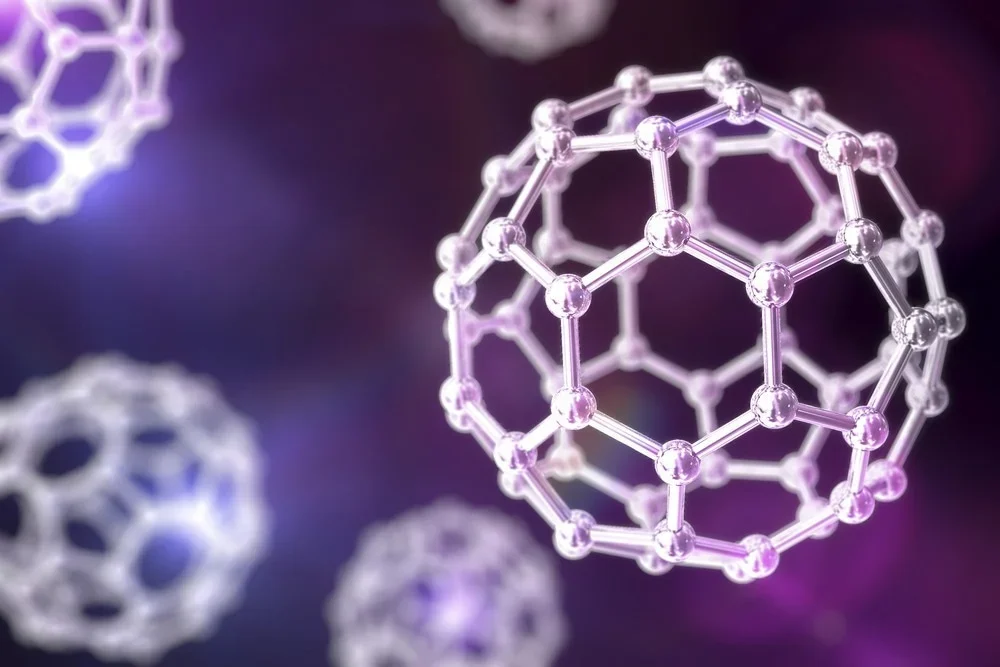
It is at this point that nanotechnology can be considered a robust and enduring field of science, reinforced by decades of innovation, exploration, and eagerness to study theory after theory. By the 1990s, scientists had discovered quantum dots (nanocrystal semiconductors mentioned in the very beginning of this literature review) and mapped out their various properties (Northwestern University, 2021). A notion of different nanoparticle “shapes” had emerged from previous research regarding thiol group self-assembled monolayers (Northwestern University, 2021), buckyballs (spherical fullerenes, or molecules composed of at least sixty carbon atoms, per Dutta and Hussain (2022), and carbon nanotubes (hollow tubes of hexagonally connected carbon atoms, per Northwestern University (2021)). That last shape in particular (carbon nanotubes) is unique for its high Young’s modulus (ability to resist mechanical forces), tensile strength, and conductive properties (CAS Science Team, 2024). Carbon nanotubes have found usages in radiation shields, light absorption, and facilitating in-orbit additive manufacturing by reducing electrostatic discharge of 3D printer components (McSweeney, 2025).
1999 and 2000 brought the subset of nanolithography, or the process of printing nanoscale patterns on silicon wafers to make computer chips (Amsterdam Science Park, 2025). Just like a writer lays ink upon a paper to inscribe letters and words, nanolithography functions on a “dip-pen” method, where an AFM tip delivers molecular “inks” (biomolecules, alkanethiols, or other polymers) to a substrate (Liu et al., 2020). The “dip-pen” process has enabled the methodologies of polymer pen lithography and beam-pen lithography, producing a multifaceted set of processes ranging from etching to carving to printing (Belmar, 2024).
Right around this time is when nanotechnologies were taking the Eastern hemisphere by storm, predominantly within China. Only a few decades earlier, the Cultural Revolution (1966-1976) had ravaged science and engineering initiatives across China (Freeman and Huang, 2015)—its effects compounded by the Red Terror, a radical Maoist movement which killed millions of citizens (including a substantial amount of Chinese intelligentsia) and abolished educational institutions (Chang and Madson, 2013). Mao Zedong’s successor, Deng Xiaoping, was able to adopt a political posture of pragmatism by implementing broad economic reforms that not only integrated China into the global economy (Council on Foreign Relations, 2025) but bolstered scientific research (Weaver, 2022). China’s nanotechnology initiatives originate from Xiaoping’s 1986 “National High Technology Research and Development Program”, which funded over a thousand Chinese nanotechnology projects from 1990-2002 (Weaver, 2022). Prominent institutions like Peking University, City University of Hong Kong, and Nanjing University are not only domestic pioneers in the world of nanotechnology, but across the globe (Weaver, 2022).
Additionally, India initiated substantial investments in nanotechnology around the early 2000s (Beumer, 2017). The country launched their National Nanoscience and Nanotechnology Initiative in October 2001 to focus on infrastructure development, drug delivery, and gene targeting (Kumar, 2014). Japan’s Economic Association organized a special department on nanotechnology in 2000, eventually developing a national “Framework Plan” of research in 2001 (Tolochko, n.d.). South Africa’s Nanotechnology Initiative was established in 2002, serving as the impetus for further advancements in fuel cells, mineral-processing industries, and water treatment (Cele et al., 2025). From a broader perspective, the quest for nanotechnologies has rippled throughout other parts of the African continent. This is evident through Nigeria’s national initiative (created in 2006 and facilitates the steady publication of research articles), and Egypt’s establishment of several research centers dedicated to materials science in the early 2000s (Lateef, 2022; Kapiel, 2023).
In the last two and a half decades (2000-2025), nanotechnology has evolved into a global, popular, revolutionary field (Malik et al., 2023). Prasser (2025) reports top nanotechnology trends in the context of business growth, including carbon nanomaterials, semiconductors, and nanosensors. For reference, the global nanosensors market was valued at a whopping $901.78 million USD in 2025 and is estimated to grow to a colossal $1,1712.89 million by 2033 (Prasser, 2025). Today’s startups and researchers recognize the transformative impacts of nanotechnologies, whether its wearable biosensors that send electrochemical signals (Abbasi, 2025), sprayable nanofibers to treat skin wounds (InPart, 2024), or silicon carbide qubits for quantum computing (Ali, 2025). In all of this, one must consider how nanotechnologies will be sustainable solutions for the present without compromising the wellbeing of future generations (hence, this literature review has come full circle to discuss biogenic nanoparticles).
Examples of Biogenic Nanoparticles
Gold nanoparticles, known for their unique optoelectronic properties and tunability, are used in organic photovoltaics, sensory probes, and the facilitation of drug delivery (Millipore Sigma, 2025). In a remarkable effort, scientists have harnessed Lactobacillus kimchicus to synthesize gold nanoparticles, in which metal ions are reduced via enzymes and form tiny clusters (precursors to nanoparticles) (Mughal et al., 2021). Researchers Datkhile et al. (2023) synthesized biogenic gold nanoparticles using Lasiosiphon eriocephalus leaf extract, taking advantage of the leaf extract’s redox properties to donate electrons to gold ions. Such plant-based gold nanoparticles have shown higher antioxidant properties than the derivative extract itself due to their adsorptive nature and high surface area, which allow it to efficiently neutralize free radicals (Suliasih et al., 2024). Moreover, their antibacterial properties can be attributed to the synergistic effect of phytoconstituents from the plant extract which attach to the externalities of the nanoparticles (Datkhile et al., 2024). Gold nanoparticles have also been generated from Bacillus subtilis (Patil and Chandrasekaran, 2020), a “well-studied, fast-growing” organism that is “proficient at secreting proteins and making small fine chemicals” (Errington and van der Aart, 2020, para. 1).
Just like their gold counterparts, silver biogenic nanoparticles are known for their comprehensive formation methods (bacteria, fungi, yeasts, algae, and plants) (Rai et al., 2021). Whether it’s bacteria like Bacillus siamensis or Citrobacter freundii, and plant extracts like Protium serratum or Zea mays, eco-friendly biogenic synthesis is here to stay (Rai et al., 2021). More specifically, silver nanoparticles from Selaginella myosurus demonstrate anti-inflammatory properties under both in vivo and in vitro conditions (Patil and Chandrasekaran, 2020), due to the presence of flavonoids and biflavonoids in Selgaginella species (Wadhwa et al., 2023). With regards to flavonoids, they inhibit the secretion of lysozymes and β-glucuronidase (Al-Khayri et al., 2022). The former enzyme type actually harbors an anti-inflammatory effect against histamine (VinMec, 2025) and cytokines (Tagashira et al., 2018)—except for when activating the inflammatory immune responses of certain bacteria (Ragland and Criss, 2017). When in high quantities, the latter enzyme type can reverse the liver’s detoxification process and initiate inflammation (Bertagna, 2024). Biflavonoids are anti-inflammatory by mitigating oxidative stress and fighting free radicals (Bordas, n.d.).
Silver nanoparticles from Lindera strychnifolia, an Asian medicinal plant celebrated for its antioxidant properties (Albert, 2024), are reported in Patil and Chandrasekaran (2020) to have wound healing properties. This conclusion has been corroborated by Kalantari et al.’s 2020 study, which highlights silver nanoparticle-embedded, wound dressing polymers that promote bacterial and microbial resistance. Interestingly enough, both gold and silver nanoparticles have been used to promote wound healing activity in animals, and do not induce any toxic effects (Patil and Chandrasekaran, 2020). As a whole, nanomaterials encourage wound healing by expediting cell migration and proliferation, carrying antibiotics, and disrupting biofilm that may form on prolonged scars (Nandhini et al., 2024). Better yet, some nanoparticles like silver can be integrated with materials like starch or collagen to form a composite material to create a synergistic, mechanically-durable, high-swelling-capacity wound dressing (Nandhini et al., 2024).
Copper oxide nanoparticles derived from Ficus religosa leaf extract have shown superior wound healing activity by upregulating proteinaceous growth factors of various sizes (60, 47, 32, 26, and 25 kilodaltons, as reported in Patil and Chandrasekaran (2020)) which facilitate the re-epithelialization process. Copper releases ions to break down bacterial cell walls and membranes (Nandhini et al., 2024), as proven by a National Institutes of Health virology experiment which found that SARS-COV2 survived the shortest amount of time on copper compared to six other materials (Oistacher, 2020). Additionally, this reddish metallic beauty is capable of rusting, which pulls electrons from bacterial cell wall lipids, destroying a bacterium’s external protection (Oistacher, 2020). These properties can be augmented by multi-metal procedures, such as Mathews et al.’s (2013) study which showed that bacteria in direct contact with iron (or copper) and within the proximity of copper ion release were completely dead within approximately an hour and a half. Copper has also been shown to disrupt bacterial mitochondria by generating reactive oxygen species (Patil and Chandrasekaran, 2020), which are unstable molecules containing oxygen and also known as “free radicals” (National Cancer Institute, 2025).
Other oxides, such as zinc oxide, magnesium oxide, iron oxide, and titanium dioxide, are also strong inhibitors of both Gram-positive and Gram-negative bacteria (Kadiyala et al., 2018). In particular, iron oxide has garnered excitement in the scientific community due to its magnetic properties, creating biosynthesized “magnetosome” nanocrystals which are coated in a lipid-based layer due to the phospholipid bilayer of the bacteria that cultivates it (Mughal et al., 2021). Fungi such as Aspergillus are known for producing iron oxide nanoparticles, which are being used to chelate heavy metals and radioactive materials (Mughal et al., 2021). The proficiency of nanoparticle creation in fungi is linked to its ability to secrete extracellular enzymes and engage in intracellular biomineralization, where 1) precursor metal ions are uptaken in fungal cells; then 2) the ions are assimilated into the fungal biomass; followed by 3) a reduction of metal ions due to both enzymatic/non-enzymatic processes; leading to 4) a formation of iron oxide nanoparticles (Rami et al., 2024). It is also important to note that iron oxide nanoparticles belong to a broader family of “magnetites”, which are used in magnetic resonance imaging (MRIs), oscillation damping, and recording machines (Mughal et al., 2021).
Conclusion
Metal oxide nanoparticles are considered as one of the more prevalent nanomaterial types due to their thermal conductivity and heat transfer (Khalil et al., 2017), as well as large surface areas and wastewater-related applications (Naseem and Durrani, 2021). This is why metal oxide nanoparticles (and even gold or silver ones) contribute to a broader idea of “green synthesis”—both the creation and usages of biogenic nanoparticles revolve around natural processes (Morgan and Aboshanab, 2024). Green synthesis is ecologically friendly, economically efficient, and still produces exceptionally productive outcomes through a wide array of nanoparticles (Morgan and Aboshanab, 2024). Moreover, the methodology of green synthesis is rooted in avoiding the production of harmful, chemical by-products and replacing them with organic systems (Singh et al., 2018). According to Huston et al. (2021) it is “just as effective, if not more so, than traditional synthesis” (para. 1).
From Democritus to Bohr to Feynman, and across centuries of global exploration, nanoparticles have allowed scientists to unravel infinitely large issues with infinitesimal solutions. Just like how nanoparticles can vary in elemental composition, origin, shape, size, and structure (Joudeh and Linke, 2022), humans differ genetically (National Human Genome Research Institute, 2023), culturally (Becoming Human, 2023), and possess unique life experiences (Glück et al., 2018). It is precisely these differences that make nanoparticles (and humans) so resistant, adaptable, and innovative. Nanoparticles are the Lilliputian representations of challenging the status quo, finding applications in electronics, medicine, biotechnology, and quantum computing—all without being visible to the naked eye.
In the context of sustainability, numerous environmentally friendly nanoparticles are emerging, taking an already extraordinary field of study to the next level. Experts from all facets of STEM (biologists, quantum scientists, mathematicians, etc) are collaborating to create technologies that improve energy efficiency, decontaminate wastewater, reduce carbon emissions, and fortify agriculture (Nanografi, 2025). Given the wide range of methodologies used to create nanoparticles, it is important that scientists are not only identifying the most efficient avenues, but those that will benefit the planet. Additionally, some nanoparticles, when applied in unnecessary or excessive situations, may pose toxicological and hazardous impacts to human health (Joudeh and Linke, 2022). These drawbacks should not be ignored, but expanded upon to ensure responsible nanoparticle usage.
Thus, researchers should continue augmenting green synthesis methods, develop robust regulatory frameworks, uphold safety expectations, and consider hybrid developments like medical nanorobotics or artifical intelligence (AI)-driven nanoparticle design (John, 2025).
References
Abbasi, I. (2025, March 4). AZoNano. AZoNano. https://www.azonano.com/article.aspx?ArticleID=6865
Abdel-Megeed, R. M. (2025). Biogenic nanoparticles as a promising drug delivery system. Toxicology Reports, 14, 101887. https://doi.org/10.1016/j.toxrep.2024.101887
About Humanism. (2025, January 9). Humanism vs Scholasticism: A Comparative Exploration - ABOUT HUMANISM. Inside Political Science. https://abouthumanism.com/humanism-vs-scholasticism/
Al-Khayri, J. M., Sahana, G. R., Nagella, P., Joseph, B. V., Alessa, F. M., & Al-Mssallem, M. Q. (2022). Flavonoids as Potential Anti-Inflammatory Molecules: A Review. Molecules, 27(9), 2901. https://doi.org/10.3390/molecules27092901
Albert, L. (2024, August 19). Lindera Strychnifolia: properties and benefits. Silkbiotic. https://silkbiotic.com/en/blogs/glossaire-scientifique/lindera-strychnifolia?srsltid=AfmBOoo3TgziwmMRSy8bjc6pP2XLMMEE9L3ytNWuWt4f_XHPRIvrK9Qr
Ali, O. (2025, October 14). Nanotechnology in Quantum Computing. AZoNano.com. https://www.azonano.com/article.aspx?ArticleID=3251
Alok Jha. (2014, January 12). Why you can’t travel at the speed of light. The Guardian; The Guardian. https://www.theguardian.com/science/2014/jan/12/einstein-theory-of-relativity-speed-of-light
Alpha Wax. (n.d.). Paraffin Wax Structure: Molecular Chains & Properties - Alphawax. Alphawax.com. https://www.alphawax.com/blog/paraffin-wax-structure
Altammar, K. A. (2023). A review on nanoparticles: characteristics, synthesis, applications, and challenges. Frontiers in Microbiology, 14(1155622). https://doi.org/10.3389/fmicb.2023.1155622
Amadio, A., & Kenny, A. (n.d.). Aristotle | Britannica. Www.britannica.com. https://www.britannica.com/biography/Aristotle/additional-info#contributors
Amsterdam Science Park. (2025, January 16). Nanolithography. Amsterdam Science Park. https://www.amsterdamsciencepark.nl/focus-areas/high-tech-systems_materials/nanolithography-at-amsterdam-science-park/
Bayda, S., Adeel, M., Tuccinardi, T., Cordani, M., & Rizzolio, F. (2019). The History of Nanoscience and Nanotechnology: From Chemical–Physical Applications to Nanomedicine. Molecules, 25(1), 112. https://doi.org/10.3390/molecules25010112
Becoming Human. (2023, June 29). Cumulative Culture • Becoming Human. Becoming Human. https://becominghuman.org/pathways-to-discovery/unique-human-species/cumulative-culture/
Belmar, L. (2024, October 29). Nanolithography 101: How Nano-Precision Fuels Technological Breakthroughs. Systems for Research. https://sfr.ca/blogs/news/nanolithography-101-how-nano-precision-fuels-technological-breakthroughs
Bennett, A. (2021, July 26). After The Fall Of Rome: Who Were The Barbarian Successor Kingdoms? TheCollector. https://www.thecollector.com/fall-of-rome-barbarian-invasion/
Berryman, S. (2004, August 15). Democritus (Stanford Encyclopedia of Philosophy). Stanford.edu; Stanford. https://plato.stanford.edu/entries/democritus/
Berryman, S. (2005). Ancient Atomism (Stanford Encyclopedia of Philosophy). Stanford.edu. https://plato.stanford.edu/entries/atomism-ancient/
Bertagna, B. (2024, July 24). Understanding Beta-Glucuronidase: Causes, Testing, and Treatment for High Levels. Rupa Health. https://www.rupahealth.com/post/understanding-beta-glucuronidase-causes-testing-and-treatment-for-high-levels
Beumer, K. (2017). Travelling risks: How did nanotechnology become a risk in India and South Africa? Journal of Risk Research, 21(11), 1362–1383. https://doi.org/10.1080/13669877.2017.1304978
Bhalla, N., Jolly, P., Formisano, N., & Estrela, P. (2016). Introduction to Biosensors. Essays in Biochemistry, 60(1), 1–8. https://doi.org/10.1042/ebc20150001
Bordas. (n.d.). CITRUS BIOFLAVONOIDS: NATURAL ANTIOXIDANT AND ANTI-INFLAMMATORY - Bordas S.A. Bordas S.A. Retrieved November 29, 2025, from https://www.bordas-sa.com/en/citrus-bioflavonoids-natural-antioxidant-and-anti-inflammatory/
Bortel, T., Baddorf, A., Vasudevan, R., & Moeck, P. (2023). Detecting and Correcting Piezoelectric-tube Actuator Drift Induced Distortion in Atomic-Resolution Scanning Tunneling Microscope Images from Crystal Surfaces . Oxford Academic. https://academic.oup.com/mam/article/29/Supplement_1/148/7228315
Britannica. (2019). Atom - Development of atomic theory. In Encyclopædia Britannica. https://www.britannica.com/science/atom/Development-of-atomic-theory
Britannica Editors. (2020a). Bohr model | Description & Development. In Encyclopædia Britannica. https://www.britannica.com/science/Bohr-model
Britannica Editors. (2020b). Kalām | Islam. In Encyclopædia Britannica. https://www.britannica.com/topic/kalam-Islam
Buckles, S. (2024, January 25). What did Aristotle discover about the atom? -. Wisdomshort.com. https://wisdomshort.com/philosophers/aristotle/on-atoms
Caltech Science Exchange. (2024). What Is the Uncertainty Principle and Why Is It Important? Caltech Science Exchange. https://scienceexchange.caltech.edu/topics/quantum-science-explained/uncertainty-principle
Cartwright, M. (2023, November 8). Scientific Revolution. World History Encyclopedia. https://www.worldhistory.org/Scientific_Revolution/
CAS Science Team. (2024, March 29). From batteries to drug delivery: Emerging applications of carbon nanotubes. Cas.org; CAS. https://www.cas.org/resources/cas-insights/batteries-drug-delivery-emerging-applications-carbon-nanotubes
CD Bioparticles. (n.d.). Properties and Applications of Quantum Dots - Creative Diagnostics. Www.cd-Bioparticles.com. https://www.cd-bioparticles.com/t/Properties-and-Applications-of-Quantum-Dots_56.html
Cele, L., Ray, S. S., & Coville, N. J. (2025). Guest editorial: nanoscience and nanotechnology in South Africa. South African Journal of Science, 105(7-8), 242–242. https://www.scielo.org.za/scielo.php?script=sci_arttext&pid=S0038-23532009000400001
Chang, W., & Madson, N. H. (2013). Inside China’s legal system (pp. 27–44). Chandos Publishing.
Chase, A. (2020, October 6). Not all grafts are created equal: Improving valve-sparing aortic root surgery. Stanford Cardiovascular Institute. https://med.stanford.edu/cvi/mission/news_center/articles_announcements/not-all-grafts-are-created-equal-improving-valve-sparing-aortic.html
ChemCases. (2024). 2: Discovery of the Neutron (1932). Libretexts.org. https://chem.libretexts.org/Ancillary_Materials/Exemplars_and_Case_Studies/Case_Studies/Nuclear_Energy_for_Today
CK-12. (2019, May 14). CK12-Foundation. Flexbooks.ck12.org. https://flexbooks.ck12.org/cbook/ck-12-chemistry-flexbook-2.0/section/4.14/primary/lesson/rutherfords-atomic-model-chem/
Council on Foreign Relations. (2025). How China Transformed Under Mao Zedong and Deng Xiaoping. CFR Education from the Council on Foreign Relations. https://education.cfr.org/learn/reading/china-mao-zedong-deng-xiaoping
Datkhile, K. D., Durgawale, P. P., Jagdale, N. J., More, A. L., & Patil, S. R. (2024). Biosynthesized silver nanoparticles of Cissus woodrowii inhibit proliferation of cancer cells through induction of apoptosis pathway. Cancer Nanotechnology, 15(1). https://doi.org/10.1186/s12645-024-00283-1
Donway, W. (2023, July 19). Scholasticism: How a Philosophical Monopoly Succumbs to New Ideas | Online Library of Liberty. Libertyfund.org. https://oll.libertyfund.org/publications/reading-room/2023-07-19-donway-scholasticism
Duignan, B. (2019). Democritus | biography & facts. In Encyclopedia Britannica. https://www.britannica.com/biography/Democritus
Dunn, P. M. (2005). Aristotle (384-322 BC): philosopher and scientist of ancient Greece. Archives of Disease in Childhood - Fetal and Neonatal Edition, 91(1), F75–F77. https://doi.org/10.1136/adc.2005.074534
Dutta, S., & Hussain, C. (2022). Membranes with Functionalized Nanomaterials. Elsevier.
EBSCO. (2023a). Dark Ages (historiography) | Research Starters | EBSCO Research. EBSCO. https://www.ebsco.com/research-starters/history/dark-ages-historiography
EBSCO. (2023b). Democritus | Research Starters | EBSCO Research. EBSCO. https://www.ebsco.com/research-starters/history/democritus
Edinburgh Instruments. (2021, July 8). What is Raman Spectroscopy? - Edinburgh Instruments. Edinburgh Instruments. https://www.edinst.com/resource/what-is-raman-spectroscopy/
Elezz, M. A., Aboeleneen, N. M., Abd-ElMonem, N. M., & Sorour, F. H. (2025). A comprehensive review: Functional nanomaterials for renewable energy: Innovations, applications, and sustainable strategies. Next Materials, 9, 101001. https://doi.org/10.1016/j.nxmate.2025.101001
Environmental Law and Policy Center. (2020, April 17). Professor Mark Ratner | Environmental Law & Policy Center. Environmental Law & Policy Center. https://elpc.org/team/professor-mark-ratner/
Errington, J., & van der Aart, L. T. (2020). Microbe profile: Bacillus subtilis: Model Organism for Cellular development, and Industrial Workhorse. Microbiology, 166(5), 425–427. https://doi.org/10.1099/mic.0.000922
ESA. (2012). Max Planck: Originator of quantum theory. Esa.int. https://www.esa.int/Science_Exploration/Space_Science/Planck/Max_Planck_Originator_of_quantum_theory
Fiveable Content Team. (2024). 5.1 The Scientific Revolution. Fiveable.me. https://fiveable.me/hs-honors-world-history/unit-5/scientific-revolution/study-guide/0C4f6rpsOhAFFzUq
Fiveable Content Team. (2025a). Law of Constant Composition - (Intro to Chemistry) - Vocab, Definition, Explanations | Fiveable. Fiveable.me. https://fiveable.me/key-terms/intro-chem/law-constant-composition
Fiveable Content Team. (2025b). The Rise of Scholasticism and Medieval Philosophy | European History – 1000 to 1500 Class Notes | Fiveable. Fiveable. https://fiveable.me/europe-1000-1500/unit-6/rise-scholasticism-medieval-philosophy/study-guide/OPKEqBoExRLQpYIC
Fowler, M. (n.d.). Atoms. Galileo.phys.virginia.edu. https://galileo.phys.virginia.edu/classes/252/atoms.html
Freeman, R., & Huang, W. (2015). Cultural Revolution - an overview | ScienceDirect Topics. Www.sciencedirect.com. https://www.sciencedirect.com/topics/social-sciences/cultural-revolution
Glück, J., Bluck, S., & Weststrate, N. M. (2018). More on the MORE Life Experience Model: What We Have Learned (So Far). The Journal of Value Inquiry, 53(3). https://doi.org/10.1007/s10790-018-9661-x
Grumezescu, A. (2016). Nanobiomaterials in Soft Tissue Engineering : Applications of Nanobiomaterials. Elsevier Science.
Gupta, A. (2023). Advanced Materials Science Research. Adv. Mate. Sci. Res, 6(3), 6. https://www.openaccessjournals.com/articles/exploring-nanostructures-the-future-of-materials-and-technology.pdf
H.A. Alluhaybi, Ghoshal, S. K., B.O. Alsobhi, & W.N. Wan Shamsuri. (2019). Visible photoluminescence from gold nanoparticles: A basic insight. Optik, 192, 162936–162936. https://doi.org/10.1016/j.ijleo.2019.162936
Han, X. X., Rodriguez, R. S., Haynes, C. L., Ozaki, Y., & Zhao, B. (2022). Surface-enhanced Raman spectroscopy. Nature Reviews Methods Primers, 1(1), 1–17. https://doi.org/10.1038/s43586-021-00083-6
Han, Y.-X., Bai, B., Zhang, J.-Y., Huang, J.-T., Feng, P.-Y., & Sun, H.-B. (2024). Light-modulated van der Waals force microscopy. Nature Communications, 15(1). https://doi.org/10.1038/s41467-024-53461-5
History of the Atomic Theory. (2019). Isaac Newton. History of the Atomic Theory. https://historyoftheatomictheory.weebly.com/isaac-newton.html
Husain, N. (2024). January 1928: The Dirac equation unifies quantum mechanics and special relativity. Aps.org. https://www.aps.org/apsnews/2024/11/mathematical-intuition-dirac-quantum-mechanics
Hussain, S. (2021, July 4). What is Kalam? The Usūlī. https://theusuli.com/2021/07/04/what-is-kalam/
Huston, M., DeBella, M., DiBella, M., & Gupta, A. (2021). Green Synthesis of Nanomaterials. Nanomaterials, 11(8), 2130. https://doi.org/10.3390/nano11082130
InPart. (2024). Top 10 new nanotechnology innovations. Inpart.io. https://www.inpart.io/blog/top-10-new-nanotechnology-innovations
J. S. Thaslima Nandhini, Karthikeyan Elumalai, & S. Rajeshkumar. (2024). Nanomaterials for wound healing: Current status and futuristic frontier. Biomedical Technology, 6, 26–45. https://doi.org/10.1016/j.bmt.2023.10.001
John, J. (2025). Cutting-Edge Nanoparticle Innovations in Biomedical Science: Synthesis, Applications, Challenges, and Future Prospects. Journal of Nanotechnology and Nanomaterials, 6(1), 43–66. https://doi.org/10.33696/nanotechnol.6.062
Johnson, M. R. (2006, June 15). Aristotle on Teleology. Notre Dame Philosophical Reviews. https://ndpr.nd.edu/reviews/aristotle-on-teleology/
Joudeh, N., & Linke, D. (2022). Nanoparticle classification, physicochemical properties, characterization, and applications: a comprehensive review for biologists. Journal of Nanobiotechnology, 20(1). https://doi.org/10.1186/s12951-022-01477-8
Kadiyala, U., Kotov, N. A., & VanEpps, J. S. (2018). Antibacterial Metal Oxide Nanoparticles: Challenges in Interpreting the Literature. Current Pharmaceutical Design, 24(8), 896–903. https://doi.org/10.2174/1381612824666180219130659
Kalantari, K., Mostafavi, E., Afifi, A. M., Izadiyan, Z., Jahangirian, H., Rafiee-Moghaddam, R., & Webster, T. J. (2020). Wound dressings functionalized with silver nanoparticles: promises and pitfalls. Nanoscale, 12(4), 2268–2291. https://doi.org/10.1039/C9NR08234D
Kapiel, T. (2023, February 6). Dr.Tarek Kapiel: Nanotechnology and mitigating the effects of climate change in Egypt. المستقبل الاخضر. https://greenfue.com/dr-tarek-kapiel-nanotechnology-and-mitigating-the-effects-of-climate-change-in-egypt/
Kauffner, P. (2022, May 21). The Rise and Fall of the “Dark Ages.” Medievalists.net. https://www.medievalists.net/2022/05/dark-ages/
Khalil, M., Jan, B. M., Tong, C. W., & Berawi, M. A. (2017). Advanced nanomaterials in oil and gas industry: Design, application and challenges. Applied Energy, 191, 287–310. https://doi.org/10.1016/j.apenergy.2017.01.074
Khan Academy. (2023). Key Points - Dalton’s atomic theory. Khanacademy.org. https://www.khanacademy.org/science/mh-grade-9-bridge-course-science/x109ad1e366099af5:inside-the-atom/x109ad1e366099af5:atomic-models/a/daltons-atomic-theory-version-2
Khan, I., Saeed, K., & Khan, I. (2017). Nanoparticles: Properties, Applications and Toxicities. Arabian Journal of Chemistry, 12(7), 908–931. https://doi.org/10.1016/j.arabjc.2017.05.011
Kumar, A. (2014). Nanotechnology Development in India An Overview. https://www.ris.org.in/sites/default/files/Publication/DP%20193%20Amit%20Kumar.pdf
Kumar, A., Shah, S. R., Jayeoye, T. J., Kumar, A., Akshay Parihar, Prajapati, B., Singh, S., & Kapoor, D. U. (2023). Biogenic metallic nanoparticles: biomedical, analytical, food preservation, and applications in other consumable products. 5. https://doi.org/10.3389/fnano.2023.1175149
Lateef, A. (2022). Nanotechnology has much to offer Nigeria but research needs support. https://doi.org/10.64628/aaj.6sx373vmu
Lennox, J. (2017). Aristotle’s Biology (Stanford Encyclopedia of Philosophy). Stanford.edu. https://plato.stanford.edu/entries/aristotle-biology/
LibreTexts Chemistry. (n.d.). Bohr’s Hydrogen Atom. LibreTexts Chemistry. https://chem.libretexts.org/Bookshelves/Physical_and_Theoretical_Chemistry_Textbook_Maps/Supplemental_Modules_(Physical_and_Theoretical_Chemistry)/Quantum_Mechanics/09._The_Hydrogen_Atom/Bohr's_Hydrogen_Atom
LibreTexts Chemistry. (2016, June 23). 5.11: Quantum Mechanical Atomic Model. LibreTexts Chemistry. https://chem.libretexts.org/Bookshelves/Introductory_Chemistry/Introductory_Chemistry_(CK-12)/05%3A_Electrons_in_Atoms/5.11%3A_Quantum_Mechanical_Atomic_Model
LibreTexts Humanities. (2021, March 15). 10.4: The Scientific Revolution. Humanities LibreTexts. https://human.libretexts.org/Courses/Cosumnes_River_College/HUM_301%3A_Introduction_to_the_Humanities_(Binder)/10%3A_The_Age_of_Reason_and_Revolution/10.04%3A_The_Scientific_Revolution
LibreTexts Physics. (2016, November 1). 7.3: The Heisenberg Uncertainty Principle. LibreTexts Physics. https://phys.libretexts.org/Bookshelves/University_Physics/University_Physics_(OpenStax)/University_Physics_III_-_Optics_and_Modern_Physics_(OpenStax)/07%3A_Quantum_Mechanics/7.03%3A_The_Heisenberg_Uncertainty_Principle
Liu, G., Petrosko, S. H., Zheng, Z., & Mirkin, C. A. (2020). Evolution of Dip-Pen Nanolithography (DPN): From Molecular Patterning to Materials Discovery. Chemical Reviews, 120(13), 6009–6047. https://doi.org/10.1021/acs.chemrev.9b00725
Loyola Marymount University. (n.d.). Atomic Force Microscope (AFM) - Loyola Marymount University. Cse.lmu.edu. https://cse.lmu.edu/research/instrumentsandfacilities/atomicforcemicroscopeafm/
Lozano, C. (2024, November 12). Nanotechnology. Education.nationalgeographic.org; National Geographic Society. https://education.nationalgeographic.org/resource/nanotechnology/
MacIntosh, J. J. (2002). Robert Boyle (Stanford Encyclopedia of Philosophy). Stanford.edu. https://plato.stanford.edu/entries/boyle/
Malik, S., Muhammad, K., & Waheed, Y. (2023). Nanotechnology: A Revolution in Modern Industry. Molecules, 28(2), 661. https://doi.org/10.3390/molecules28020661
Matson, R. (n.d.). KSU | Faculty Web - Scientific Laws and Theories. Facultyweb.kennesaw.edu. https://facultyweb.kennesaw.edu/rmatson/links/theories.php
McSweeney, K. (2025). Five Innovations Made Possible With Carbon Nanotubes | Northrop Grumman. Northrop Grumman. https://www.northropgrumman.com/what-we-do/space/mission-enabling-products/five-innovations-made-possible-with-carbon-nanotubes
Medina, C., Santos-Martinez, M. J., Radomski, A., Corrigan, O. I., & Radomski, M. W. (2007). Nanoparticles: pharmacological and toxicological significance. British Journal of Pharmacology, 150(5), 552–558. https://doi.org/10.1038/sj.bjp.0707130
Miller, G. L. (2023). Heisenberg Articulates the Uncertainty Principle | EBSCO. EBSCO Information Services, Inc. | Www.ebsco.com. https://www.ebsco.com/research-starters/history/heisenberg-articulates-uncertainty-principle
Millipore Sigma. (2025). Blue-White Screening & Protocols for Colony Selection. Merck, 1(1). https://www.sigmaaldrich.com/MX/en/technical-documents/technical-article/genomics/cloning-and-expression/blue-white-screening
Mohammed, H., Mia, M. F., Wiggins, J., & Desai, S. (2025). Nanomaterials for Energy Storage Systems—A Review. Molecules, 30(4), 883–883. https://doi.org/10.3390/molecules30040883
Morgan, R. N., & Aboshanab, K. M. (2024). Green biologically synthesized metal nanoparticles: biological applications, optimizations and future prospects. Future Science OA, 10(1). https://doi.org/10.2144/fsoa-2023-0196
Mughal, B., Zaidi, S. Z. J., Zhang, X., & Hassan, S. U. (2021). Biogenic Nanoparticles: Synthesis, Characterisation and Applications. Applied Sciences, 11(6), 2598. https://doi.org/10.3390/app11062598
Nanografi. (2025). Innovative Nanotechnology Solutions for Sustainable Development. Nanografi Advanced Materials. https://shop.nanografi.com/blog/innovative-nanotechnology-solutions-for-sustainable-development/
nanosurf. (n.d.). Contact Modes. Www.nanosurf.com. https://www.nanosurf.com/en/support/afm-modes/contact-modes
Naseem, T., & Durrani, T. (2021). The role of some important metal oxide nanoparticles for wastewater and antibacterial applications: A review. Environmental Chemistry and Ecotoxicology, 3, 59–75. https://doi.org/10.1016/j.enceco.2020.12.001
National Cancer Institute. (2025). NCI Dictionary of Cancer Terms. National Cancer Institute; Cancer.gov. https://www.cancer.gov/publications/dictionaries/cancer-terms/def/reactive-oxygen-species
National Human Genome Research Institute. (2023, February 1). Human Genomic Variation. Genome.gov. https://www.genome.gov/about-genomics/educational-resources/fact-sheets/human-genomic-variation
Nature Nanotechnology. (2009). “Plenty of room” revisited. Nature Nanotechnology, 4(12), 781–781. https://doi.org/10.1038/nnano.2009.356
Nave, R. (n.d.). Raman Scattering. Hyperphysics.phy-Astr.gsu.edu. http://hyperphysics.phy-astr.gsu.edu/hbase/atmos/raman.html
Nave, R. (2020). Uncertainty Principle. Gsu.edu. http://hyperphysics.phy-astr.gsu.edu/hbase/uncer.html
Northwestern University. (2021, June 15). From 1971 to 2000 - International Institute for Nanotechnology. International Institute for Nanotechnology. https://www.iinano.org/from-1971-to-2000/
O’Connor, B. (2023). Khan Academy. Khanacademy.org. https://www.khanacademy.org/humanities/whp-origins/x23c41635548726c4:regional-webs/x23c41635548726c4:assessing-the-dark-age-5-3/a/article-the-dark-ages-debate
Oistacher, M. (2020, April 30). How Metals Like Silver and Copper Kill Germs - Manhattan Gold & Silver. Manhattan Gold & Silver. https://www.mgsrefining.com/blog/how-metals-like-silver-and-copper-kill-germs/
Open Culture. (2013). Richard Feynman Introduces the World to Nanotechnology with Two Seminal Lectures (1959 & 1984) | Open Culture. Open Culture. https://www.openculture.com/2013/04/richard_feynman_introduces_the_world_to_nanotechnology.html
Panos, K. (2019, January 8). Irène Joliot-Curie And Artificial Radioactivity. Hackaday. https://hackaday.com/2019/01/08/irene-joliot-curie-and-artificial-radioactivity/
Park Systems. (n.d.). ParkSystems. Www.parksystems.com. https://www.parksystems.com/en/learning-center/how-afm-works
Pathak, C. (2024, November 17). Dalton’s Atomic Theory: The Most Important Discovery EVER? Explore Branches of Science and Engineering. https://entechonline.com/daltons-atomic-theory-the-most-important-discovery-ever-3/
Patil, S., & Chandrasekaran, R. (2020). Biogenic nanoparticles: a comprehensive perspective in synthesis, characterization, application and its challenges. Journal of Genetic Engineering and Biotechnology, 18(1). https://doi.org/10.1186/s43141-020-00081-3
Penn Today. (2020, July 17). Plato was right. Earth is made, on average, of cubes. Penn Today. https://penntoday.upenn.edu/news/plato-was-right-earth-made-average-cubes
Physics StackExchange. (n.d.). Visible Light - Newton’s corpuscular theory. Physics Stack Exchange. https://physics.stackexchange.com/questions/21658/newtons-corpuscular-theory
Prasser, D. (2025, November 18). 9 Nanotechnology Trends in 2023. StartUs Insights. https://www.startus-insights.com/innovators-guide/nanotechnology-trends/
Purdue University. (n.d.). John Dalton. Chemed.chem.purdue.edu. https://chemed.chem.purdue.edu/genchem/history/dalton.html
Qadhi, D. Y. (2008, April 9). The Role of Atomism in the Groups of Kalam. MuslimMatters.org. https://muslimmatters.org/2008/04/09/the-role-of-atomism-on-groups-of-kalam/
Ragland, S. A., & Criss, A. K. (2017). From bacterial killing to immune modulation: Recent insights into the functions of lysozyme. PLOS Pathogens, 13(9), e1006512. https://doi.org/10.1371/journal.ppat.1006512
Rai, M., Ingle, A. P., Trzcińska-Wencel, J., Wypij, M., Bonde, S., Yadav, A., Kratošová, G., & Golińska, P. (2021). Biogenic Silver Nanoparticles: What We Know and What Do We Need to Know? Nanomaterials, 11(11), 2901. https://doi.org/10.3390/nano11112901
Ramsden, J. (2013). Applied Nanotechnology. William Andrew.
Ramsden, J. (2016). Nanotechnology : an introduction. William Andrew.
Shields, J. (2020, December 23). The Bohr Model: Quickly Replaced But Never Forgotten. HowStuffWorks. https://science.howstuffworks.com/life/cellular-microscopic/bohr-model.htm
Singh, J., Dutta, T., Kim, K.-H., Rawat, M., Samddar, P., & Kumar, P. (2018). “Green” synthesis of metals and their oxide nanoparticles: applications for environmental remediation. Journal of Nanobiotechnology, 16(1). https://doi.org/10.1186/s12951-018-0408-4
Southwest Center for Microsystems Education. (n.d.). How Does a Cantilever Work? Participant Guide Description and Estimated Time to Complete. https://nanohub.org/resources/25845/download/App_CantiL_PK11_PG.pdf
St. Bonaventure University. (n.d.). The Elements of the Uncertainty Principle. Web.sbu.edu. https://web.sbu.edu/physics/faculty/dimattio/Clare102/readings/slaven.htm
Sterner, R., Small, G., & Hood, J. (2011). The Conservation of Mass. Nature. https://www.nature.com/scitable/knowledge/library/the-conservation-of-mass-17395478/
Styer, D. (1999). A Brief History of Quantum Mechanics. Www2.Oberlin.edu. https://www2.oberlin.edu/physics/dstyer/StrangeQM/history.html
Suliasih, B. A., Budi, S., & Katas, H. (2024). Synthesis and application of gold nanoparticles as antioxidants. Pharmacia, 71, 1–19. https://doi.org/10.3897/pharmacia.71.e112322
Tagashira, A., Nishi, K., Matsumoto, S., & Sugahara, T. (2018). Anti-inflammatory effect of lysozyme from hen egg white on mouse peritoneal macrophages. Cytotechnology, 70(3), 929–938. https://doi.org/10.1007/s10616-017-0184-2
THE NOBEL PRIZE. (n.d.). The Nobel Prize in Physics 1986. NobelPrize.org. https://www.nobelprize.org/prizes/physics/1986/ruska/biographical/
THE NOBEL PRIZE. (2019). The Nobel Prize in Physics 1922. NobelPrize.org. https://www.nobelprize.org/prizes/physics/1922/bohr/facts/
The Welding Institute. (2021). What are Nanoparticles? Definition, Size, Uses and Properties. Www.twi-Global.com; TWI. https://www.twi-global.com/technical-knowledge/faqs/what-are-nanoparticles
Tillman, N. T., Bartels, M., & Dutfield, S. (2024, October 29). Einstein’s Theory of General Relativity. Space.com. https://www.space.com/17661-theory-general-relativity.html
Tolochko, N. (n.d.). HISTORY OF NANOTECHNOLOGY. https://www.eolss.net/Sample-Chapters/C05/E6-152-01.pdf
Toumey, C. P. (2008). Reading Feynman Into Nanotechnology. Techné: Research in Philosophy and Technology, 12(3), 133–168. https://doi.org/10.5840/techne20081231
Tripathy, J., Mishra, A., Pandey, M., Thakur, R. R., Chand, S., Rout, P. R., & Shahid, M. K. (2024). Advances in Nanoparticles and Nanocomposites for Water and Wastewater Treatment: A Review. Water, 16(11), 1481. https://doi.org/10.3390/w16111481
Tufts University. (2024). How the Scanning Tunneling Microscope Works | Department of Chemistry. Tufts.edu. https://chem.tufts.edu/sykes-lab/resources/how-scanning-tunneling-microscope-works
U.S. Department of Energy. (n.d.). Manhattan Project: People > Scientists > RICHARD FEYNMAN. Www.osti.gov. https://www.osti.gov/opennet/manhattan-project-history/People/Scientists/richard-feynman.html
U.S. Department of Energy. (2024). DOE Explains...Relativity. Energy.gov. https://www.energy.gov/science/doe-explainsrelativity
Unger, E. (2023, October 9). The Evolution of Nanotechnology - Plasma-Therm. Plasma-Therm. https://www.plasmatherm.com/the-evolution-of-nanotechnology/
University of California, Riverside. (n.d.). Scanning Tunneling Microscopy (STM) (II). https://intra.ee.ucr.edu/~jianlin/EE206/Winter2008/EE206-lecture-notes-8-STM-II.pdf
VinMec. (2025). What is lysozyme chloride? Uses and dosage. Vinmec International Hospital. https://www.vinmec.com/eng/blog/what-is-lysozyme-chloride-uses-and-dosages-en
Wadhwa, K., Kaur, H., Kapoor, N., Ghorai, S. M., Gupta, R., & Sahgal, A. (2023). A systematic review on antimicrobial activities of green synthesised Selaginella silver nanoparticles. Expert Reviews in Molecular Medicine, 25. https://doi.org/10.1017/erm.2023.21
Weaver, J. (2022, March 13). China as the World Leader in Nanotechnology: Another Wakeup Call for the West | Small Wars Journal by Arizona State University. Small Wars Journal by Arizona State University. https://smallwarsjournal.com/2022/03/13/china-world-leader-nanotechnology-another-wakeup-call-west/
Webb, R. (n.d.). Max Born. New Scientist. https://www.newscientist.com/people/max-born/
Woods, S., & Baumgartner, K. (2024). Heisenberg’s Uncertainty Principle. Libretexts.org. https://chem.libretexts.org/Bookshelves/Physical_and_Theoretical_Chemistry_Textbook_Maps/Supplemental_Modules_(Physical_and_Theoretical_Chemistry)/Quantum_Mechanics/02._Fundamental_Concepts_of_Quantum_Mechanics/Heisenberg
Zaccone, A. (2025, April 17). Quantum confinement explains the dramatic rise of electrical resistivity in few-nanometers-thick silicon sheets. Phys.org. https://phys.org/news/2025-04-quantum-confinement-electrical-resistivity-nanometers.html
Zeyl, D., & Sattler, B. (2017). Plato’s Timaeus (Stanford Encyclopedia of Philosophy). Stanford.edu. https://plato.stanford.edu/entries/plato-timaeus/